How Betting Odds Work on 11xplay: Decimal Odds Explained
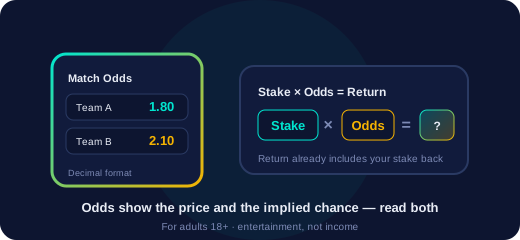
Every bet you place on 11xplay starts with a number: the odds. Read them correctly and the whole platform makes sense — you know what a bet pays, what the market thinks is likely, and whether a price looks fair. Read them wrongly and you are betting blind. The good news is that odds are far simpler than they first appear. This guide explains decimal odds from scratch, shows the one piece of arithmetic that tells you your return, and explains why the numbers move during a match — all without hype and without any promises about results.
What decimal odds actually are
11xplay shows odds in decimal format, which is the clearest system to read. A decimal number such as 1.80, 2.00 or 3.50 simply tells you how much each unit you stake pays back in total if the bet wins — and crucially, that total already includes your original stake. So odds of 2.00 mean a winning bet returns twice your stake, odds of 1.50 return one and a half times, and odds of 3.00 return three times. There is no separate mental step to add your stake back on; the decimal figure is the complete return per unit. That is why decimal has become the standard on exchanges and why beginners find it easier than older fractional formats.
The one calculation you need: stake × odds
Here is the entire maths of a bet, and it never gets more complicated than this: stake × odds = total return. Your profit is that return minus the stake you put in. A few worked examples make it concrete:
- Stake 100 at odds 2.00 → returns 200 (100 stake + 100 profit).
- Stake 200 at odds 1.80 → returns 360 (200 stake + 160 profit).
- Stake 500 at odds 1.50 → returns 750 (500 stake + 250 profit).
These figures are illustrations of the arithmetic, not offers — the point is the method, not any particular number. Getting into the habit of doing this small multiplication before you confirm a bet is the most useful discipline in betting. It turns a vague feeling of “this could pay well” into a concrete figure you can decide about calmly. If you are still setting up, the ID registration guide covers getting started safely.
Odds are also a chance in disguise
A price is only half the story. Every set of odds also carries an implied probability — the chance the market is quietly assuming. You find it by dividing 1 by the decimal odds. Odds of 2.00 imply roughly a 50 percent chance, 4.00 implies about 25 percent, and 1.25 implies around 80 percent. This is the most valuable idea in the whole guide, because it lets you read what the market believes rather than just what it pays. A short price is the market saying “this is likely”; a long price is it saying “this is a long shot”. Once you see odds as a chance and a price at the same time, you stop chasing big numbers for their own sake and start asking the only question that matters: does this price look right for the real chance?
Short odds and long odds
You will hear bets described as short or long. Short odds, such as 1.20, mark a strong favourite: the payout is small because the outcome is judged likely. Long odds, such as 6.00, mark an underdog: the potential return is bigger because the outcome is seen as unlikely. Neither is automatically the better bet. A short-priced favourite can still be poor value if the price is too tight for the real risk, and a long shot can be perfectly fair if the market has underrated it. Bigger odds are not a shortcut to bigger winnings — they pay more precisely because they win less often. Judging the price against the genuine chance, as covered in our betting tips guide, is what separates thoughtful bettors from the crowd.
Why the odds keep moving
If you watch a cricket match on the platform, the odds shift constantly, and that is entirely normal. Odds are live opinion, not fixed fact. As a wicket falls, an over passes or one side edges ahead, the market re-prices what is now likely, so a team quoted at 2.00 before the innings can drift out to 3.00 or shorten to 1.50 as play unfolds. This is the heartbeat of in-play betting and the reason it feels so different from a single pre-match bet. It also means the odds you see are a snapshot: the moment you place a bet, you lock in that price, and later movement no longer changes the price you took. Our IPL session betting guide goes deeper into how lines move over by over.
Reading an odds board without getting fooled
A few honest habits keep odds working for you rather than against you. Always convert the price to an implied chance in your head before you decide — it stops a tempting-looking number from doing your thinking for you. Do the stake × odds sum every single time, so you know the exact return before you commit, not after. Be wary of anyone who frames long odds as a “sure thing”; odds are an estimate of chance, and no honest source can promise a result. And remember that the same movement that can shorten a price in your favour can just as easily drift against you, which is why chasing a moving line in a hurry rarely ends well. If a message or a stranger ever pressures you toward a “guaranteed” bet, treat it exactly as you would any other scam — the account security guide explains why.
Play responsibly
Understanding odds is a tool for making calmer decisions, not a formula for winning. Odds describe a chance and a price; they never guarantee an outcome, and a favourite at 1.20 still loses sometimes while a long shot at 6.00 occasionally lands. Betting is entertainment for adults aged 18 and over, never a way to earn income or recover a loss. Set a budget before you play, stake only what you can afford to lose, do the small maths before every bet, and if play ever stops feeling like fun, take a break and reach a support service in your region. Reading odds well simply helps you enjoy the game with your eyes open.
Ask Support About Reading the Odds on WhatsApp
Betting Odds FAQs
What do decimal odds mean on 11xplay?
Decimal odds show the full return per unit staked, including your stake. If the odds are 2.00 and you stake 100, a winning bet returns 200 in total: your 100 stake plus 100 profit. Odds of 1.50 return 150 on a 100 stake, and 3.00 returns 300. The number is simply how much each rupee staked pays back if the bet wins, which makes decimal the easiest format to read at a glance.
How do I calculate my return from the odds?
Multiply your stake by the odds. Stake times odds equals the total return, and the return already includes your stake back, so your profit is the return minus what you put in. For example, a 200 stake at odds of 1.80 returns 360 (200 times 1.80), which is 160 profit on top of the 200 you staked. Doing this small multiplication before you place any bet is the single most useful habit in betting.
What is the difference between odds and probability?
Odds are a price; probability is a chance. Decimal odds can be turned into an implied chance by dividing 1 by the odds, so 2.00 implies roughly a 50 percent chance and 4.00 implies about 25 percent. Reading both together tells you not just what a bet pays but what the market thinks is likely, which is far more useful than looking at the payout alone.
Why do the odds keep changing during a match?
Odds move because they reflect live opinion, not a fixed truth. As wickets fall, overs pass or one side pulls ahead, the market re-prices what is likely, so a team that was 2.00 before play can drift to 3.00 or shorten to 1.50 as the game unfolds. This constant movement is normal and is exactly why in-play betting feels different from a pre-match bet placed once and left alone.
What does short odds versus long odds mean?
Short odds, like 1.20, mean the market sees an outcome as likely, so the payout is small. Long odds, like 6.00, mean it is seen as unlikely, so the potential return is larger but the chance of winning is lower. Neither is automatically a good bet. A short price can be poor value and a long price can be fair; what matters is whether the odds look right for the real chance, not whether the number is big.
Are higher odds a better bet?
Not on their own. Bigger odds pay more only because the outcome is judged less likely, so chasing long shots for the size of the return is a common way to lose steadily. A sensible approach weighs the price against the genuine chance and looks for spots where the odds seem generous for the risk, rather than picking bets purely because the number is large.
What is implied probability and why does it matter?
Implied probability is the chance the odds are quietly assuming, found by dividing 1 by the decimal odds. It matters because it lets you compare the market’s view with your own. If you believe an outcome is more likely than its implied probability suggests, the odds may offer value; if you think it is less likely, the price is probably too short. This comparison is the foundation of thinking in value rather than gut feeling.
Do the odds guarantee anything about the result?
No. Odds are an estimate of chance and a statement of price, never a promise about what will happen. A heavy favourite at 1.20 still loses sometimes, and a long shot at 6.00 occasionally wins. Treat every set of odds as an informed opinion that can be wrong, stake only what you can afford to lose, and remember that betting is entertainment for adults, not a way to earn a reliable income.